As global attention turns to ocean conservation, for this year’s World Oceans Day on 8 June 2026,
Atzaró Collection shines a spotlight on the region of Misool in Raja Ampat, Indonesia – one of the world’s leading dive destinations for 2026, thanks to its extraordinary biodiversity and some of the most pristine, unspoilt coral reefs on the planet.
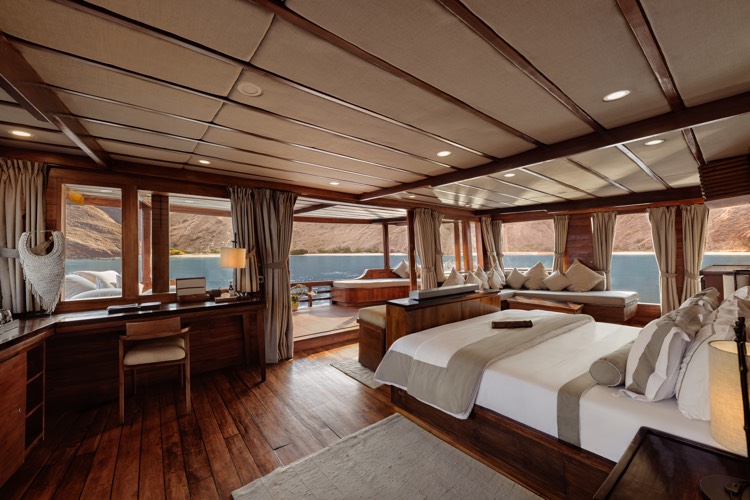
The islands are accessed aboard the award-winning charter yacht Prana by Atzaró, a beautifully crafted wooden phinisi designed for scuba diving and snorkelling adventures as well as the ultimate in barefoot luxury island-hopping. With 900 sqm of space, and nine lavish suites, life onboard is rich with fine dining, a wellness-focused spa, spectacular yoga deck, cinema under the stars and a professional crew to provide the best of service. Winner of a place on the coveted Condé Nast Traveller Gold List, Prana by Atzaró is the ultimate luxury travel experience for discerning adventure seekers.
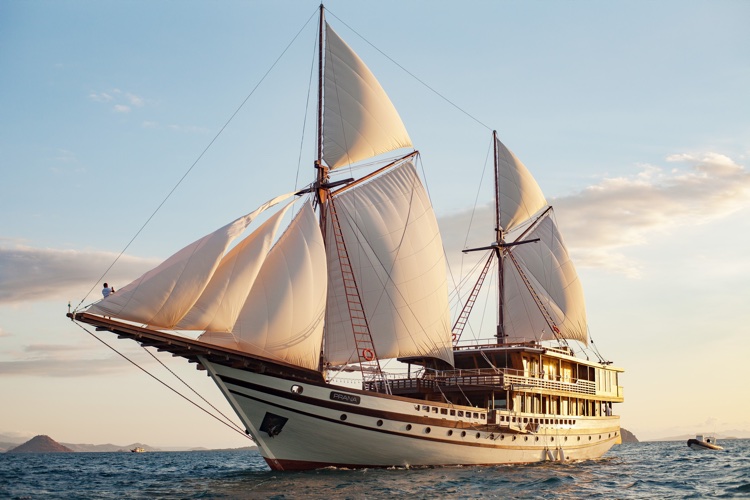
Located in the heart of the Coral Triangle, Raja Ampat is widely recognised as the most biodiverse marine environment on Earth, home to more than 75% of known coral species and an astonishing abundance of marine life. Increasingly, it represents a shift in modern dive travel – from heavily visited reef systems, to ecosystems still functioning at their full natural scale.
Misool’s remoteness is central to this distinction. With access primarily by sea rather than direct air routes, visitor numbers remain naturally limited, allowing Raja Ampat to remain one of the last great marine regions – where biodiversity thrives largely undisturbed, and where the underwater world retains a rare sense of scale, abundance and authenticity.
Nowhere is this more evident than in the southern reaches of the archipelago, within Misool, where long-standing conservation, dramatic reef formations and powerful currents have created one of the last true strongholds of ocean life. Sailing through these pristine waters, Prana by Atzaró offers rare access to a collection of signature dive sites that define why Raja Ampat is one of the most exceptional diving experiences in the world.
The Signature Dive Sites Defining Raja Ampat
The Daram Islands: A Kaleidoscope of Life
Among the most revered dive locations in Raja Ampat, the Daram Islands, east of Misool in calm conditions, offer an extraordinary concentration of marine life and remain a personal favourite among divers. A series of exposed rocky pinnacles rise from the sea, with sites such as Many Colours, Andiamo, Candy Store, and Andy’s Ultimate each revealing a different facet of this underwater world.
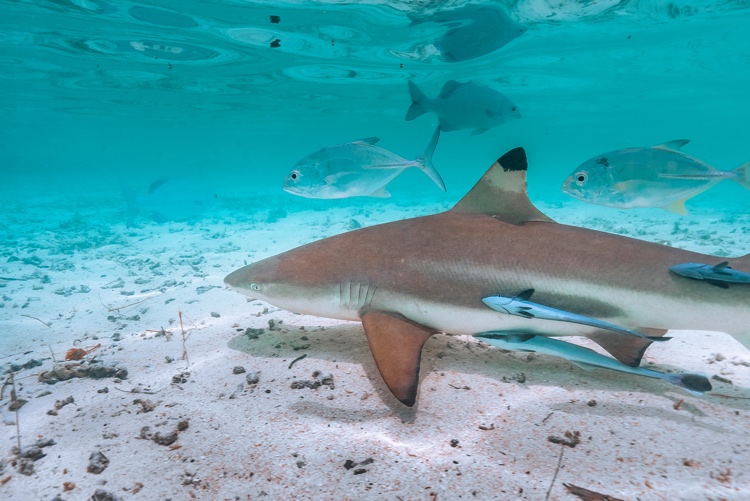
Vast schools of chevron barracuda, batfish, sweetlips, fusiliers, bumphead parrotfish, and big eye trevally create shifting silver clouds, while grey reef, white tip, and black tip sharks, along with giant groupers and Napoleon wrasse, patrol the currents.
Rare pygmy seahorses cling to gorgonian sea fans, while nudibranchs, shrimp, and candy crabs inhabit rich soft corals. Reef octopus are also frequently seen, alongside healthy hard coral in the shallows, including staghorn, brain, and pillar corals.
Magic Mountain: Where Mantas Gather
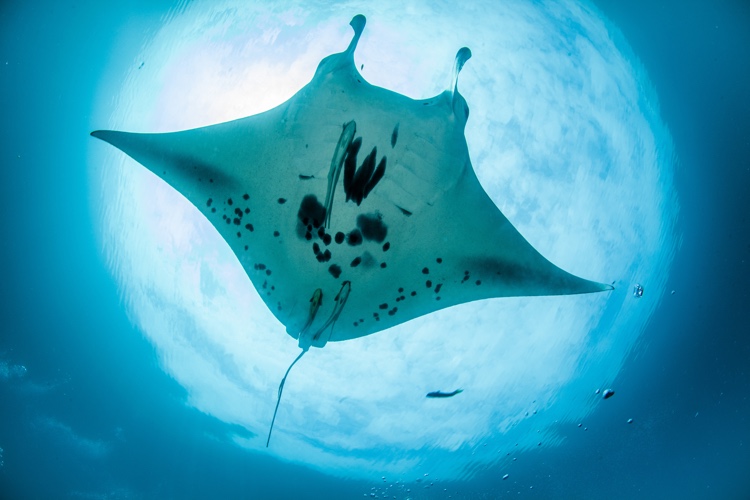
Magic Mountain (Karang Bayangan) is one of the region’s most iconic dive sites and one of the few places in the world where both reef manta rays and oceanic manta rays can be seen together. A submerged pinnacle rising from around 5 metres to over 30 metres, it functions as a natural cleaning station, drawing mantas into slow, looping formations as smaller fish attend to them.
Surrounded by schooling trevally, barracuda, sweetlips, fusiliers, and yellow snapper, along with black-tip sharks and red snapper, the site is alive with constant movement and energy. The top of the pinnacle is covered in healthy coral interwoven with whip corals and large barrel sponges, adding texture and colour to this already dramatic underwater landscape.
Boo Window & Boo Point: An Underwater Icon
Boo Window is instantly recognisable: a natural submerged archway carved through the reef, framing the deep blue beyond and creating one of the most photographed underwater scenes in Indonesia. The site sits around a small island with multiple entry points depending on current, with shallow reefs from around 5 metres ideal for snorkellers and deeper walls dropping beyond 30 metres.
Nearby, Boo Point on the eastern side is a highly active manta cleaning station, where reef mantas glide effortlessly above thriving coral gardens. The surrounding water is filled with movement – batfish that often follow divers in playful curiosity, and yellowtail barracuda, alongside black tip sharks. The reef structure is equally rich, with barrel sponges, whip corals, gorgonian and sea fans, creating a dense, layered habitat.
Four Kings: The Power of the Pinnacles
Four Kings – named after the literal translation of Raja Ampat, “Four Kings” – is a dramatic formation of four submerged pinnacles, each with its own distinct ecosystem. Rising from around 5 metres to beyond 30 metres, the site is so extensive it typically requires two dives to fully explore.
The tops of the pinnacles act as cleaning stations for reef manta rays while spotted eagle rays are frequently encountered gliding between the formations, adding scale and elegance to the scene. Strong currents draw in vast schools of chevron barracuda, batfish, sweetlips, fusiliers and parrotfish. The reef is filled with life in constant motion – damselfish and cardinalfish sheltering in crevices alongside colourful wrasse and coral shrimpfish.
Neptune’s Fan Sea: A Living Coral Tapestry
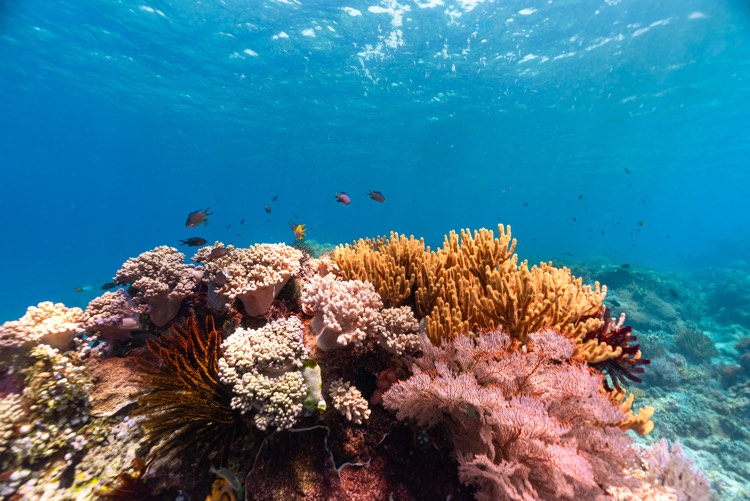
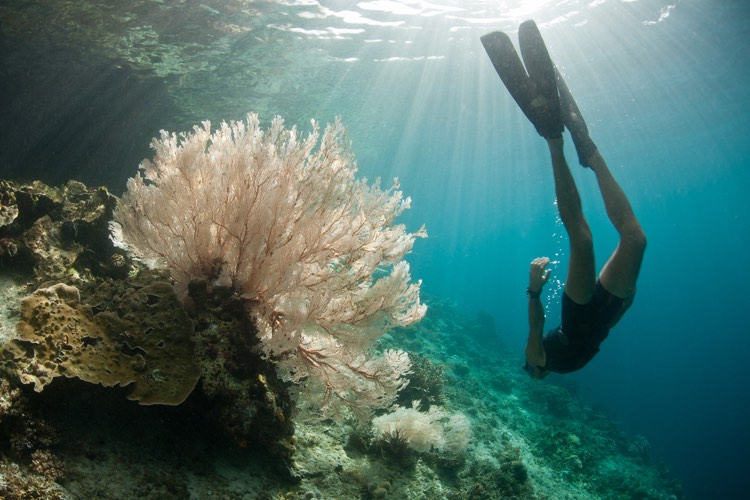
Neptune’s Fan Sea is a celebration of coral in its most abundant form. Located in the channel between Wayil Batan and Walib Islands, the site is renowned for its extraordinary density of life, with soft corals, whip corals, and sea fans stretching from the surface down to around 28 metres. It is also highly accessible for snorkellers, with the reef rising close to the top of the water column.
The walls are densely covered in colourful gorgonian sea fans, Dendronepthya soft corals, and sponges, to the point where bare rock is almost impossible to find. Rather than large predators, the focus here is on intricate reef ecosystems, where smaller species thrive in the shelter of the coral structure.
Scorpionfish and stonefish lie camouflaged among the reef, while yellow-edged moray eels weave through crevices. The water is alive with damselfish, anemonefish, angelfish, wrasse, butterflyfish, pufferfish, and coral sea trout, alongside hawksbill turtles and multiple species of pygmy seahorses hidden within the coral branches.
Celebrating the Ocean
As the world comes together for World Oceans Day 2026, Prana by Atzaró highlights the importance of protecting marine ecosystems like those found in Raja Ampat.
These waters remain one of the planet’s most intact reef systems – a rare example of marine biodiversity thriving at scale. Experiencing them first-hand offers not only extraordinary encounters, but also a deeper appreciation of the oceans and their future.
With its refined design, slow-travel ethos, and access to some of the world’s most exceptional dive sites, Prana by Atzaró represents a meaningful way to celebrate and safeguard the natural world.